OCR Physics

Circular motion
5.2.1 Kinematics of circular motion
Radian:
An angle in radian is the ratio of length of an arc over the radius of the circle:
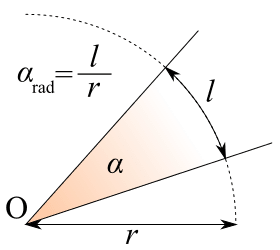
1 radian is an angle subtended from centre of a circle if the length of the arc opposite the angle is equal to radius of the circle.

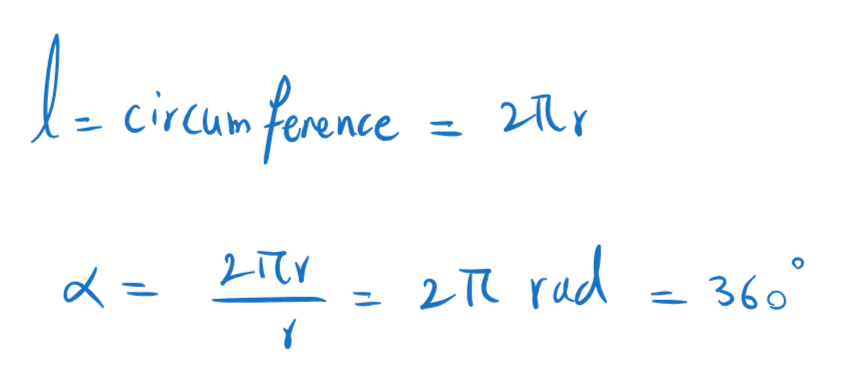
Angle in a full circle:
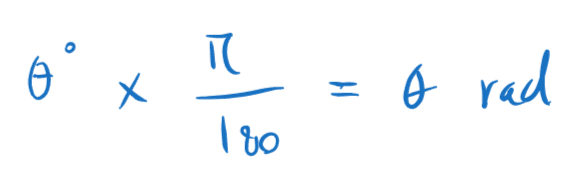
To convert an angle from degrees to radian:
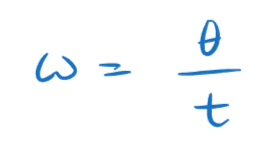
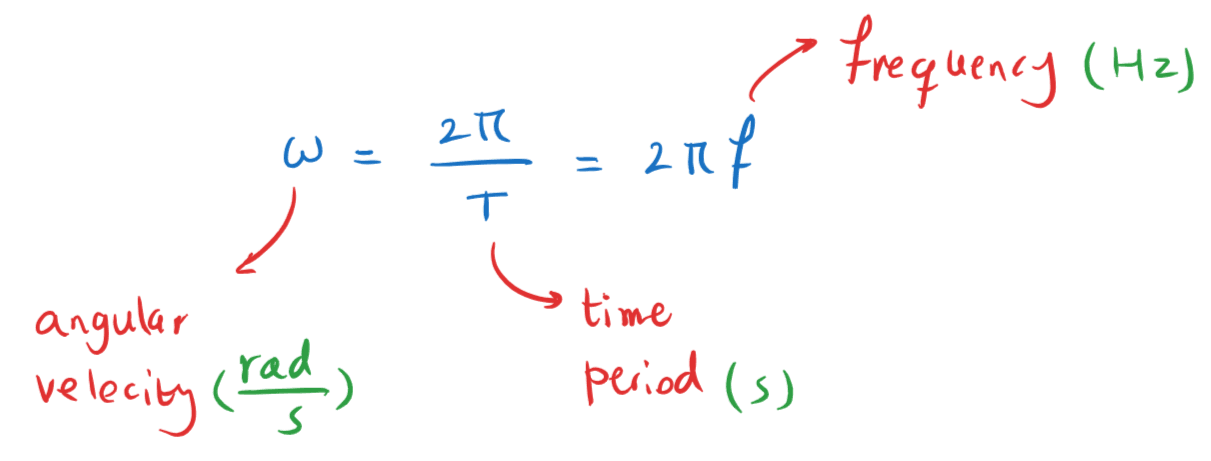
Angular velocity ω: time taken to travel an angle θ (rate of change of angle).
Number of angles in a circle: 2π. So angular velocity for circular motion:
5.2.2 Centripetal force
Velocity is a vector: has both magnitude and direction.
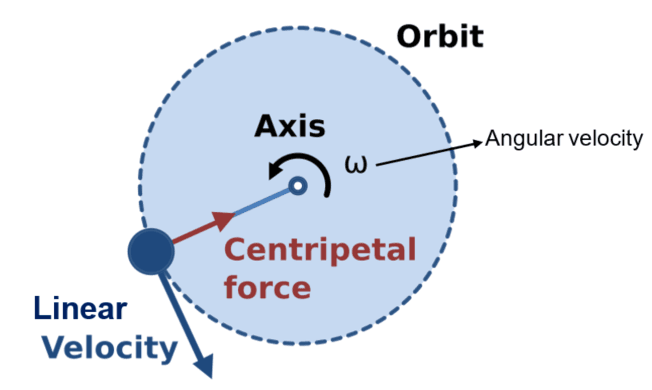
An object moving in a circular path may have constant speed, but cannot have constant velocity! Because direction is constantly changing.
Hence it is always accelerating, and there is a resultant force applied on it (Newton’s 2nd Law).
Because of inertia, objects want to move in a straight line, unless there is a resultant force applied on them which always pulls them back to the circular path.
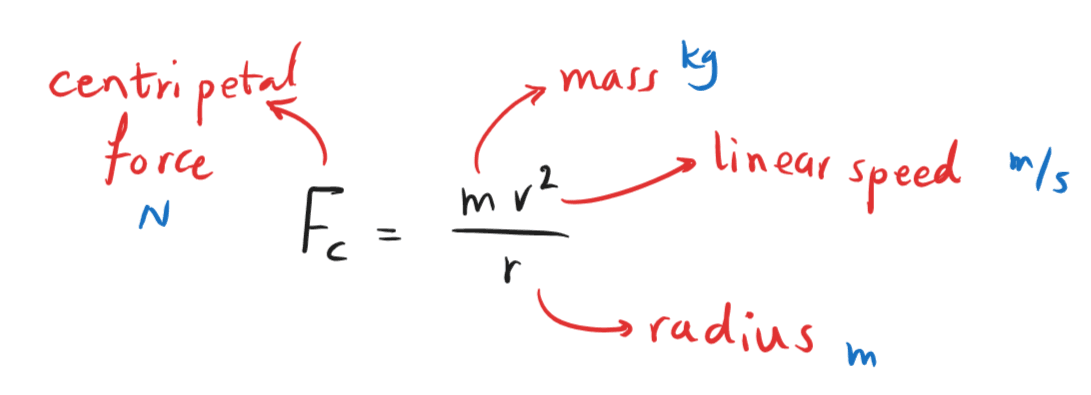
This force is called the centripetal force (Fc).
Sources of Fc:
- Satellite: gravity of the Earth;
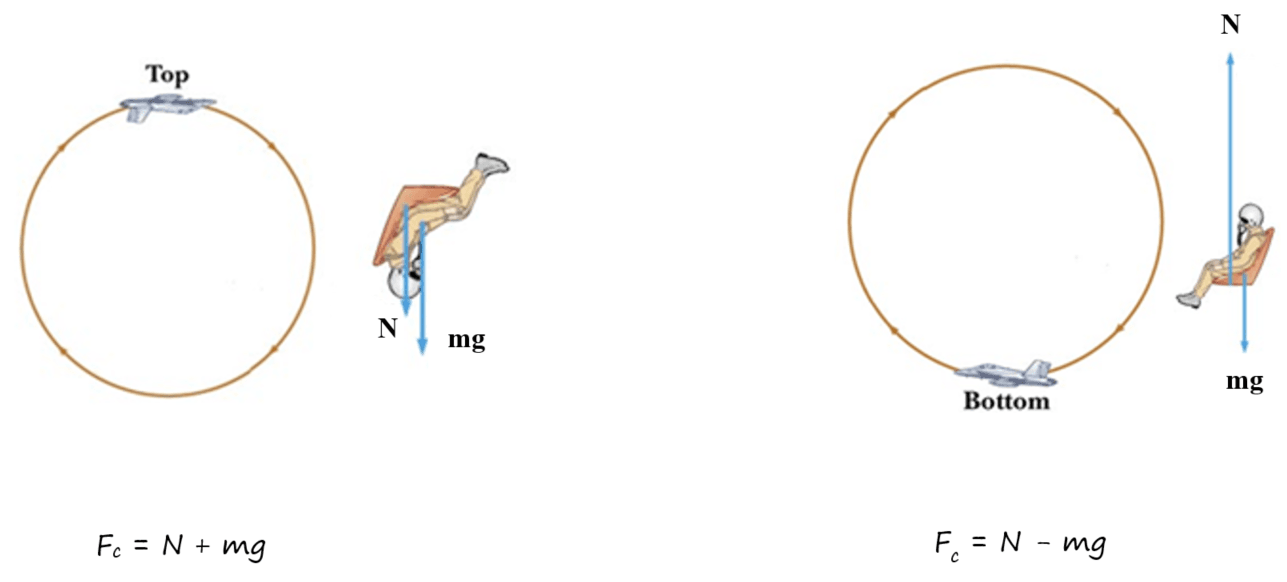
- Rollercoaster: your weight and reaction from chair;
- Car in a roundabout: friction between car tyres and the road;
- Bob attached to end of a string and swung around: tension in the string.
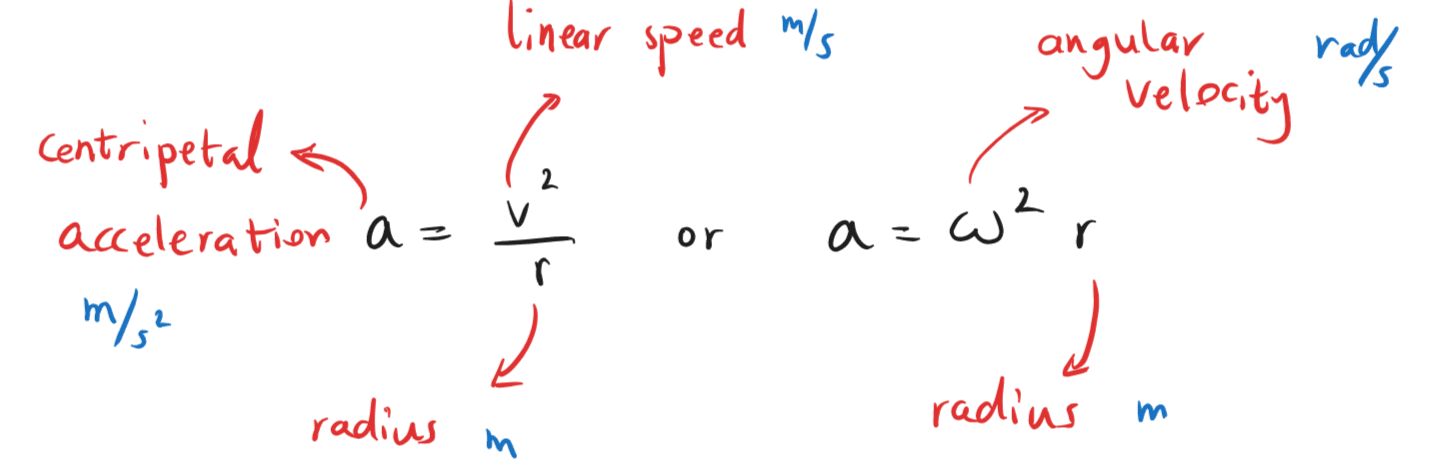
Centripetal acceleration:
The direction of the Fc is always towards the centre of the circle. And it is always perpendicular to the velocity of the object, hence it does not affect the magnitude of the velocity.
Note: there is no such thing as centrifugal force. It is mistaken for the reaction from the centripetal force!
5.2.2-1 Linear vs. angular velocity

For an object moving in a circular path with constant speed:
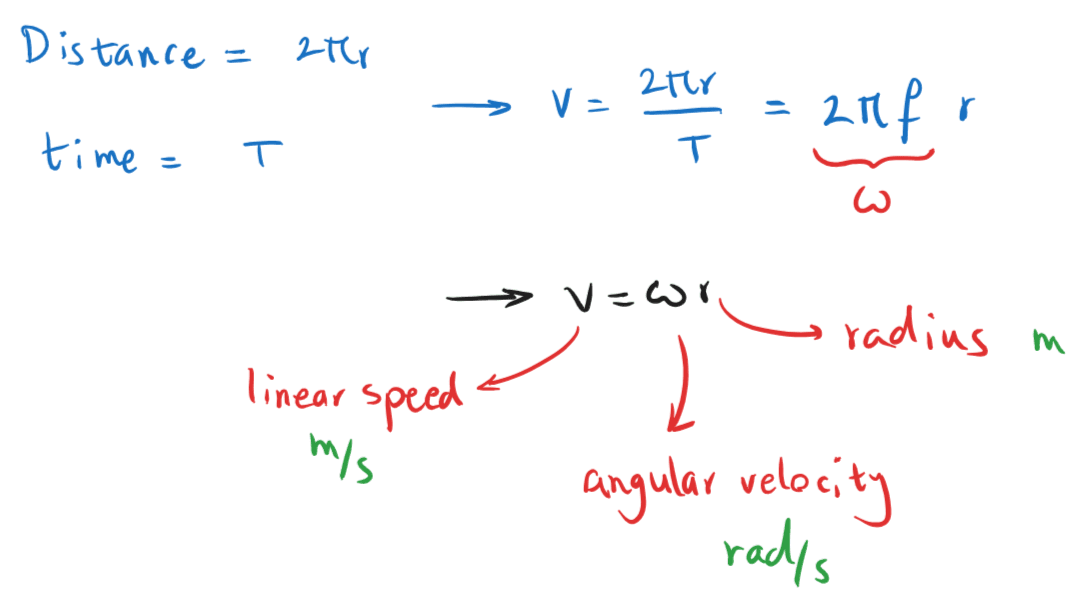
5.2.2-2 investigating centripetal force
In the experiment shown below if we rotate mass m fast enough, the weight hanger with mass M will stop falling.
In this case tension in the string (Fc) is equal to Mg.
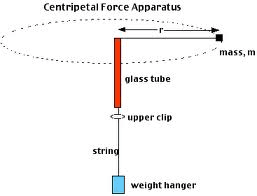
If the centripetal force is more than Mg, the weight hanger will move upwards.
Parameters studied in this experiment:
- Fc required for different masses M of weight hanger
- Linear speed
- Different radii
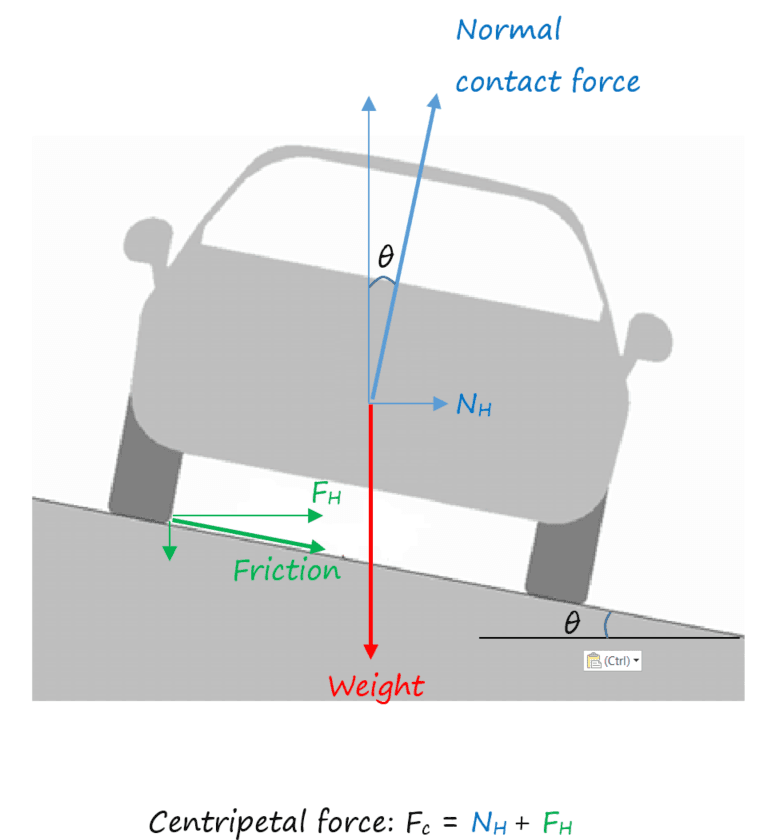
Banked roads:
A car approached a bend will slide off the road if the friction between the tires is not large enough to provide the centripetal force required.
To overcome this we bank the roads.
This way the horizontal component of the normal contact force + horizontal component of friction = Fc.
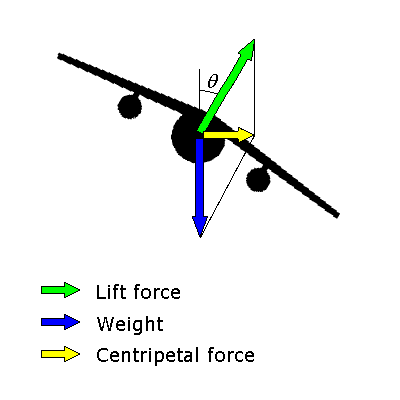
Airplane in a horizontal circle:
Here the Fc comes from the horizontal component of the lift force:
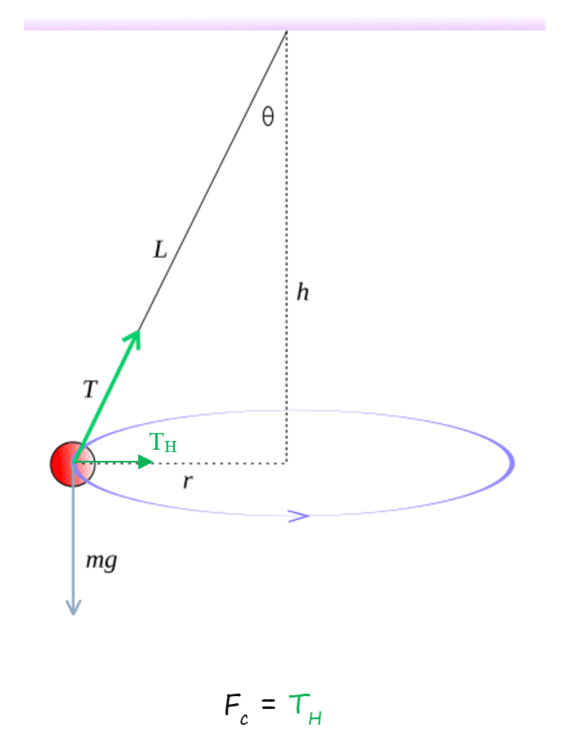
Conical pendulum:
Here the Fc is provided by the horizontal component of tension in the string:
Pilot in a vertical loop:
.
Revise and Get Paid!
If you like taking summary notes of lessons and solving past papers, see the Join Us page!